What is Double Materiality and Its Role in ESG Reporting
Materiality in ESG refers to the identification and evaluation of sustainability issues that are significant enough to require disclosure. Double materiality extends this concept in two directions, and understanding both is a prerequisite for credible CSRD compliance.
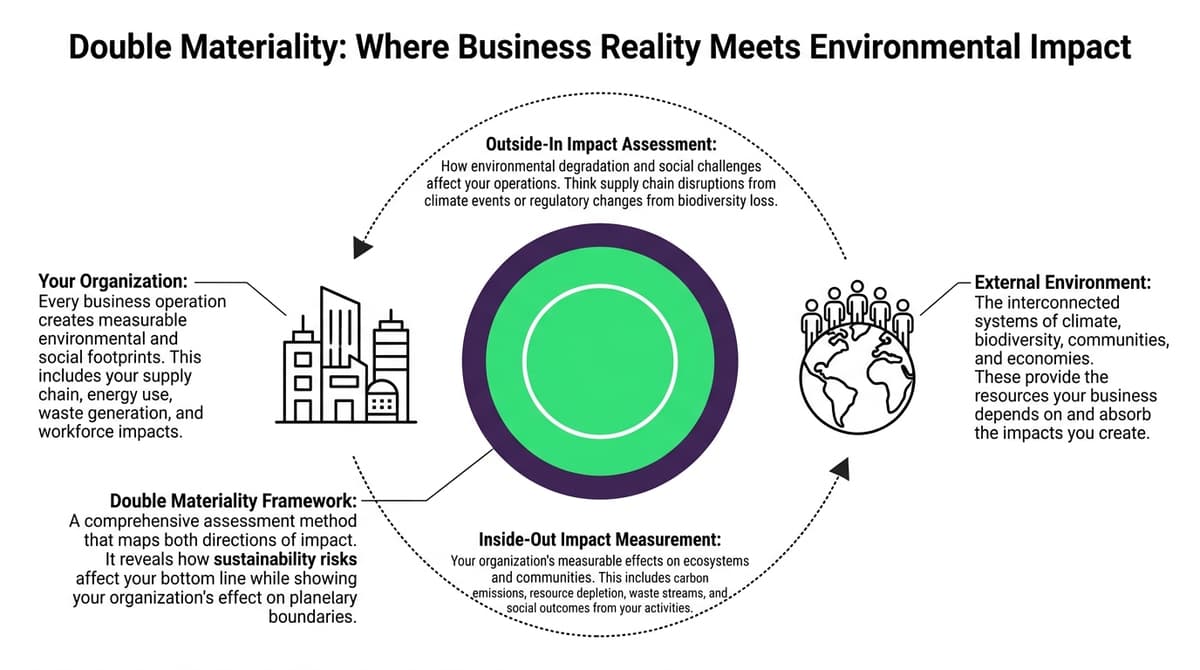
The two dimensions of materiality
Double materiality has two distinct dimensions, each with a different lens:
How does the organisation affect the environment and society? This covers both actual and potential impacts (positive and negative) across the value chain.
How do environmental and social factors affect the organisation's financial position, performance, and prospects? This is the inside-out lens required by investors.
Why it matters for CSRD
The European Sustainability Reporting Standards (ESRS), which underpin CSRD, require a double materiality assessment as the starting point for all reporting. A topic is reportable if it is material from either or both perspectives. This means a company cannot limit its disclosure to financially significant risks alone; it must also assess and report on its own impacts on people and the environment.
The assessment is not a tick-box exercise. It requires systematic stakeholder engagement, sector-specific analysis, and documented methodology. The output determines which ESRS disclosure requirements apply, making it the single most consequential step in a CSRD programme.
How frameworks differ on materiality
Not all frameworks apply the same materiality concept. SASB and IFRS S1/S2 focus primarily on financial materiality (what matters to investors). GRI takes an impact materiality approach (what matters to the world). CSRD and ESRS require both simultaneously, which is what distinguishes the double materiality standard from its predecessors.
For companies operating across multiple reporting obligations, the double materiality assessment should be designed to satisfy the broadest requirement (currently ESRS) and then mapped back to other frameworks as needed.
Conducting a double materiality assessment
- 01Define the value chain scopeMap upstream and downstream activities: purchased goods, logistics, product use, end-of-life. Boundaries must be documented.
- 02Identify sustainability topicsUse ESRS topic list as a starting point. Supplement with sector-specific issues and stakeholder input.
- 03Assess impact materialityEvaluate severity, scale, and remediability of impacts. Consider both actual and potential, positive and negative.
- 04Assess financial materialityEvaluate likelihood and magnitude of financial effects (risks and opportunities) arising from sustainability topics.
- 05Document and discloseRecord the methodology, stakeholder process, and conclusions. This documentation is subject to assurance under CSRD.
Need a double materiality assessment?
Acrypt conducts structured double materiality assessments aligned with ESRS requirements: documented, stakeholder-informed, and audit-ready.
Book a free consultation